






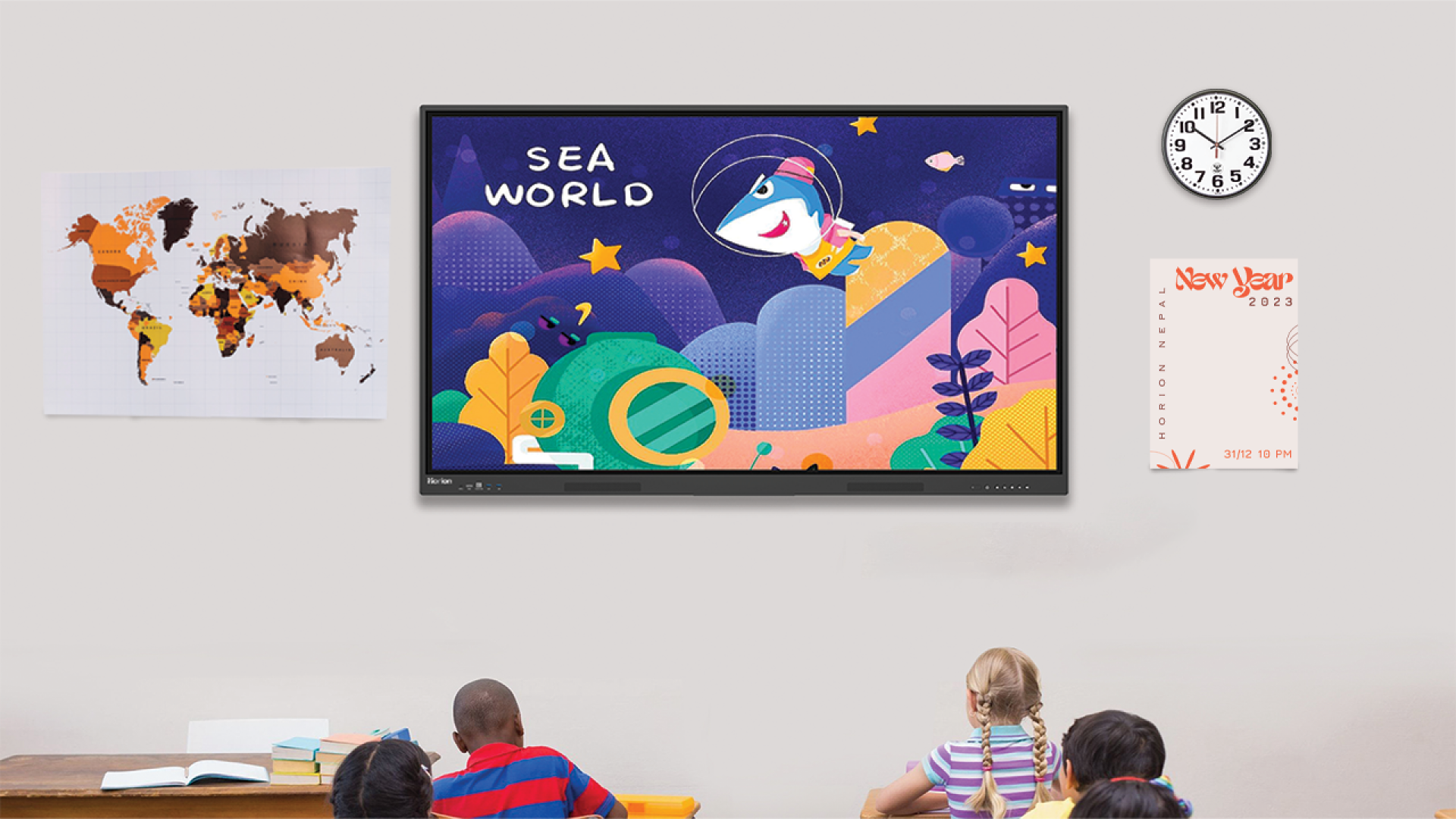
Top Reasons Every Classroom in Nepal Needs the Horion Smartboard
Classrooms in Nepal are going digital with each passing day and are leaving behind the days of basic chalkboards. Modern students grow up with touchscreens, multimedia, and instant access to information, which means that classrooms now need means that fulfill all of these requirements. There are multiple ways to do this, and one of the best methods is through smartboards in Nepal. But if you pick any random smartboards, you might not get what you require, so you should choose Horion Smartboards for your classrooms. There are many reasons for this, some of which include smartboards, which are packed with features, affordable, and flexible. But this is not all the reasons as to why you need Horion Smartboards.
In this blog, we provide you with insights on some of the top reasons every classroom in Nepal needs the Horion smartboard including aspects such as why schools are replacing projectors with interactive displays and more.
Why are schools replacing projectors with interactive displays?
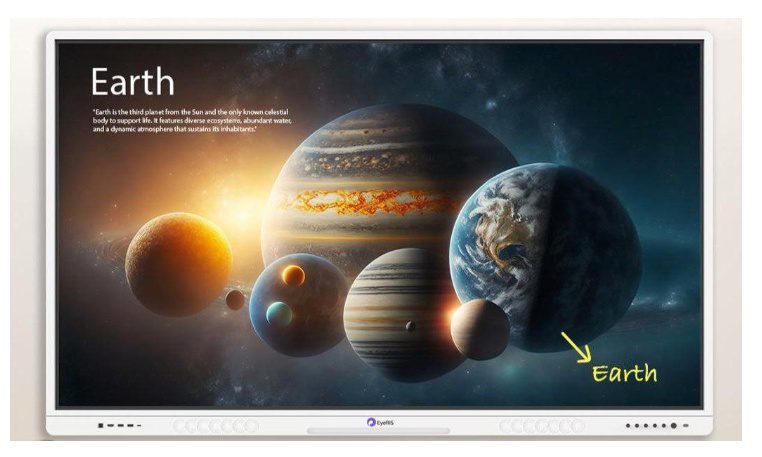
Although smartboards in Nepal are getting popular, they are still not as widely spread as other technologies, especially in the education sector, such as schools. Previously, smart class and smart education were limited to projectors and, to some extent, they still are. But many schools are replacing projectors with interactive displays. But the question remains – why are schools replacing projectors with interactive displays? This is due to a number of reasons. Here are some of the main reasons:
1. Brighter and clearer display
Projectors may find it hard to display clear images in a well-lit room. It will only work if the room is totally dark. Interactive displays have high-brightness LCD displays that remain clear and sharp in daylight. It becomes easier to view the work from all over the room.
2. True Interactive Learning
Interactive panels let teachers and students interact with the content on screen. This interactive experience encourages student involvement and enhances understanding.
3. No shadow or Glare Issues
Teachers often block the beam of light with projectors. This causes shadows to appear on the screen. Interactive displays eliminate the problem entirely, since the content is displayed directly on the panel.
4. Reduced Maintenance and Cost
The cost of maintenance is increased due to the need to change projector lamps and clean filters. Interactive displays are cost-effective in the long term as they have a longer lifespan and fewer moving parts.
5. All-in-One Smart Features
Speakers, operating systems, whiteboards, and screen sharing are some of the features that have been integrated into interactive displays. Moreover, these displays are internet-enabled, eliminating the need to use multiple devices and wiring.
6. Quicker setup and cleaner classrooms
Projectors have ceiling mounting, cables, and alignment issues. Interactive displays can be mounted like TVs, thus keeping classrooms neat and organized.
The Current Challenges in Nepalese Classrooms
Teachers in Nepal find it hard to keep students interested in learning due to inadequate learning materials. Despite the fact that teachers in Nepal are passionate and dedicated, there are several challenges.
1. Limited Visual Learning Tools
The majority of schools use basic projectors and chalkboards that are low-quality, with poor brightness. Students at the back of large rooms or those with good lighting often have difficulty seeing clearly. This reduces their attention and retention.
2. Lack of Interactivity
Students cannot participate in the lessons directly with traditional tools. Teaching sessions can easily become one-way lectures without interactive elements. Therefore, it can be difficult to accommodate different learning styles.
3. Common Technical Issues
The maintenance of projectors is a tedious and expensive job. The students and teachers are frustrated due to technical problems.
4. Digital Integration is Not Enough
The schools are lagging behind as digital literacy is gaining importance. The technology is not enough for a better learning experience. The multimedia, real-time collaboration, and tablets/laptops are missing from the technology in many schools. The teacher is unable to integrate multimedia content into the classroom.
5. Teachers’ Workload and Preparation Time
The teachers are wasting a lot of time on complex arrangements and preparations, and it is affecting the students. The teacher is spending less time with the students due to the complex technology arrangements.
6. Equity Gaps in Schools
The schools in rural areas are more likely to be better equipped with technology than schools in urban areas. The gap is causing a widening gap in the learning experience of students.
Top Reasons Every Classroom in Nepal Needs the Horion Smartboard
To face these challenges, the education sector needs to implement a standard smart board system. Doing so not only makes the class truly interactive but also enables one school to communicate with another. Now, there are options when it comes to choosing the smartboards for classrooms. Among the choices, one of the best ones is the Horion Smartboard. Horion Smartboards are a must-have in all classrooms in Nepal.
- Making Learning More Interactive: The Horion Smartboards allow teachers and students to touch the screen and write on it. This helps in interactive learning.
- Bright and Clear Display: The Horion Smartboard provides a clear display on the screen, whereas a projector will not function properly in the presence of sunlight. This is perfect for Nepal’s many school environments.
- All-in-One Smart Solution: Teachers no longer require multiple devices because the software includes whiteboarding, multimedia, screen sharing and internet access. Lessons are smoother, quicker, and better organized.
- Savings in time and reducing technical hassles: There’s no need to arrange projectors or replace bulbs. You can also forget about focusing on and aligning issues. It is easy to install and reliable. This means that teachers have more time to teach.
- Supports Multimedia Content and Digital Content: The Horion Smartboard is able to seamlessly integrate rich digital content such as videos, graphics, and presentations. This helps the teacher to easily explain complex ideas.
- Encourages Collaboration: Students are able to collaborate either on the smartboard or through their individual devices. Students are able to participate in group exercises that encourage teamwork and communication.
- Designed for long-term use: The smartboards are designed to require little maintenance. The screens are long-lasting. This means that smartboards are a great investment for the future of education.
- Bridges the Digital Divide: Smart technology will help bring the standard of education in Nepal closer to the international standard. It will also provide the children with the necessary skills they need for the future.
Horion Smartboard or Traditional Projector
Horion Smartboard is one of the most popular choices for schools. But regardless, some doubts still may remain, as projectors – which are widely used in modern times – may still seem as a viable option for a smart class. So, let’s compare Horion Smartboard vs. traditional projector to aid you in making this decision.
Feature | Horion | Traditional Projector |
Display | Bright LED display | Dim or washed on bright rooms |
Interactivity | Multi-touch screens | Display only with no direct touch interaction |
Ease of Use | All in one system with inbuilt apps and tools | Requires laptop or an external device |
Maintenance | Low maintenance | Requires regular lamp replacement and filter cleaning |
Student Engagement | Encourages interactive learning and participation | Passive multi-media viewing |
Setup | Simple wall mounted installation | Ceiling mounting, and alignment |
Versatility | Supports multimedia, internet, screen sharing, and apps | Limited by laptop or desktop CPU connected |
Long-term cost | Higher initial cost but lower maintenance expense | Lower initial cost but higher long-term maintenance |
If you want to know more about the details regarding the difference between a projector and a smartboard, do check out our previous blog on this exact topic.
Who Should Use Horion Smartboards?
The Horion Smartboards are useful in education environments where interactive learning and digital teaching tools make a difference. Therefore, in modern classrooms across Nepal, there are many types of schools that can benefit greatly from adopting this technology. Some of the important educational institutes that should use Horion Smartboards are as follows:
- Schools: Smartboards will be effective tools for teachers from the primary to higher secondary levels of schooling.
- Colleges: Professors of various subjects will be able to use smartboards for presentation and interactive learning.
- Universities: Smartboards will be effective tools for the lecture halls and seminar rooms of the university.
- Training Institutes: Training institutes that offer technical, language, and skill-based learning will be able to use smartboards.
- Coaching Centers: Coaching centers will be able to use smartboards to explain complex subjects.
- Vocational Education Centers: Smartboards will be effective tools for vocational learning.
Conclusion
Classrooms in Nepal are moving towards digital learning. Therefore, the tools used in education need to evolve alongside this change. Traditional methods such as chalkboards and projectors have served schools in the past. However, modern learning demands interactive, visual, and flexible technology. So, what can schools do? Get a good smartboard from a renowned company such as Horion. This is because smartboards from Horion address many of the key challenges present in Nepalese classrooms by making lessons more engaging and easier to manage.
In this blog, we provided you with insight into some of the key reasons why every classroom in Nepal needs a Horion smartboard. We hope you found this helpful. If you seek further insights into the various aspects of smartboards, do check out some of our other blogs. And if you want the best smartboard in Nepal, look no further than Horion Nepal – the best distributor of smartboards in Nepal.
Frequently Asked Question
1. What is a Horion Smartboard and how does it work?
A Horion Smartboard is an interactive digital display that combines a touchscreen, whiteboard, computer system, and presentation screen in one device. Teachers and students can write, draw, open multimedia content, and interact directly on the screen using touch gestures. This allows lessons to become more engaging and interactive compared to traditional teaching tools.
2. Are smartboards suitable for schools in Nepal?
Yes, smartboards are best suited for the classrooms of Nepal because they are best for digital education and multimedia education. Smartboards are best suited for classrooms because they are best suited for naturally lit rooms. Smartboards are best because they eliminate the need to buy multiple teaching pieces of equipment, like a projector and a separate speaker. Smartboards are best suited for the classrooms of Nepal because they are best for digital education and multimedia education.
3. Are Horion Smartboards better than the projector?
Yes, smartboards are better than projectors because they have more advantages over projectors. Unlike the projector, the Horion Smartboard has the advantage of interactive touch screens. It has the advantage of brighter screens. It has the advantage of requiring no maintenance because no bulbs are required.