






How to Set Up a Smart Classroom in 5 Steps
In today’s rapidly evolving educational landscape, Nepali schools face increasing pressure to modernize their teaching methods and deliver world-class learning experiences. Smart classrooms are no longer a luxury reserved for international institutions: they have become essential infrastructure for schools committed to preparing students for a technology-driven future. The transformation happening across Nepal’s education sector is remarkable, with leading institutions already reaping the benefits of interactive learning environments.
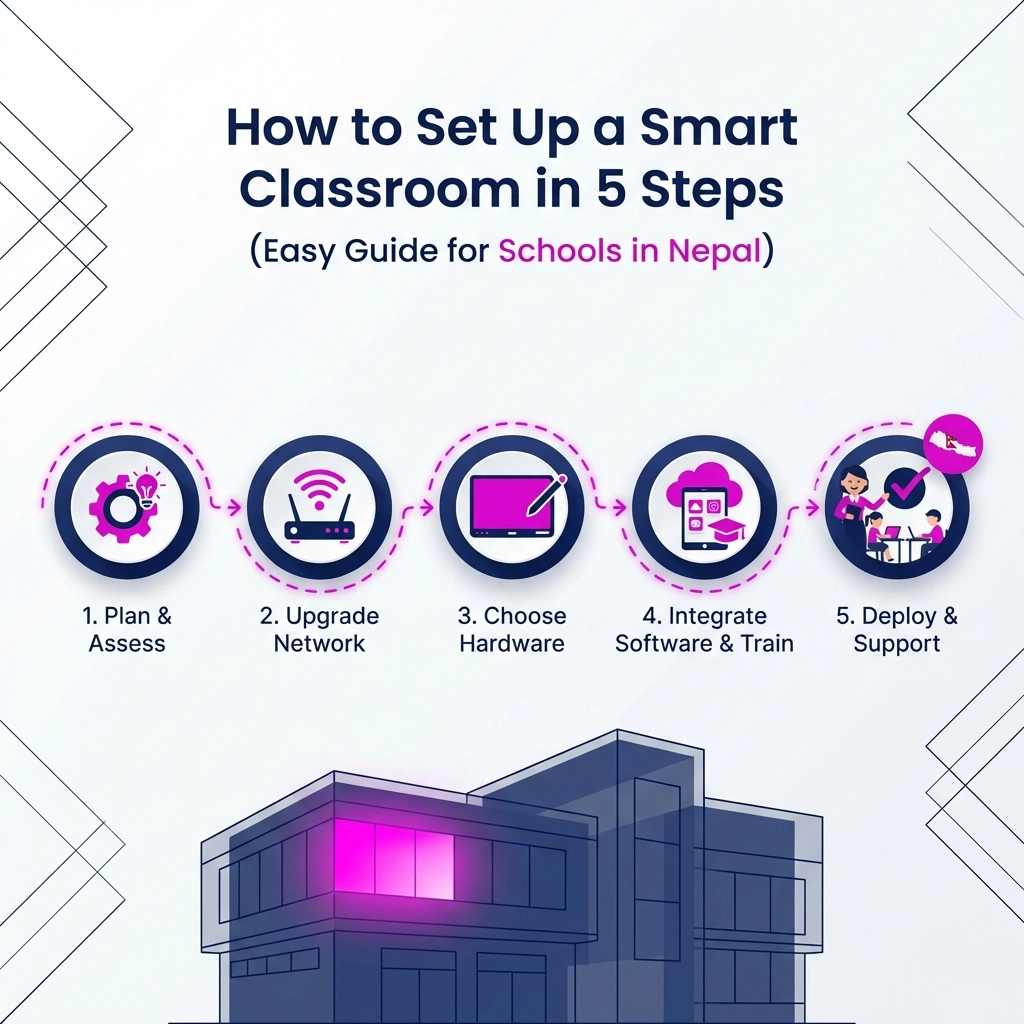
This comprehensive guide walks through the five essential steps to set up a smart classroom in Nepal, providing practical insights tailored specifically for Nepali schools, colleges, and educational institutions.
Why Smart Classrooms Matter for Nepali Schools
The traditional chalk-and-board teaching method served generations well, but evolving demands require more engaging, interactive, and effective approaches. Smart classrooms revolutionize education by combining visual, auditory, and kinesthetic learning styles into one cohesive experience.
Students retain information better when lessons include multimedia content, interactive exercises, and real-time collaboration. Teachers gain powerful tools to explain complex concepts, assess understanding instantly, and maintain student attention throughout the class period. For Nepali schools competing to attract students and deliver quality education, smart classroom technology represents the most significant upgrade available today.
Step 1: Assess Your School’s Needs and Define Goals
Every successful smart classroom implementation begins with honest assessment. Before purchasing any technology, school administrators must evaluate their current situation and establish clear objectives.
Key questions to consider:
- How many classrooms require smart technology?
- What subjects will benefit most from interactive displays?
- What is the average class size?
- Do teachers currently use any digital tools?
- What learning outcomes should improve?
Schools should categorize their implementation level based on budget and goals. The Standard level focuses on replacing traditional boards with interactive displays and basic connectivity. The Intermediate level adds student devices, collaborative software, and enhanced audio-visual systems. The Advanced level incorporates cloud-based learning management systems, real-time assessment tools, and comprehensive digital infrastructure.
Starting with a pilot program in one or two classrooms allows schools to test the implementation process, gather feedback, and refine their approach before expanding institution-wide.
Step 2: Establish Budget and Secure Funding
Creating a detailed financial plan ensures smooth implementation without unexpected expenses. Smart classroom budgets must account for several components:
- Interactive display panels
- Audio-visual accessories (cameras, microphones, speakers)
- Internet infrastructure upgrades
- Electrical improvements
- Teacher training programs
- Ongoing maintenance and support
Complete smart classroom setups vary significantly based on chosen technology and classroom size. Schools should present formal budget proposals to management boards, highlighting both immediate costs and long-term benefits including improved student outcomes, increased enrollment potential, and reduced maintenance compared to traditional equipment.
Many Nepali schools find success by implementing gradually: starting with key classrooms like science labs or computer rooms before expanding to all sections.
Step 3: Build Strong Infrastructure
Robust infrastructure forms the backbone of any successful smart classroom. Two elements require particular attention:
Reliable Internet Connectivity
Smart classrooms depend on stable internet connections for accessing cloud resources, streaming educational content, video conferencing, and real-time collaboration. Schools should invest in dedicated broadband connections with sufficient bandwidth for simultaneous use across multiple classrooms.
Electrical Systems
Interactive displays and associated equipment require consistent, clean power supply. Installing adequate electrical outlets, surge protectors, and backup power solutions prevents disruptions and protects valuable technology investments.
Without strong infrastructure, even the most advanced technology underperforms. Schools should address these foundational requirements before purchasing equipment.
Step 4: Select the Right Technology
Choosing appropriate technology represents the most critical decision in smart classroom implementation. The interactive display panel serves as the centerpiece: the primary tool teachers use daily to deliver engaging lessons.
The Horion M6APro V2: Nepal’s Most Effective Smart Classroom Solution
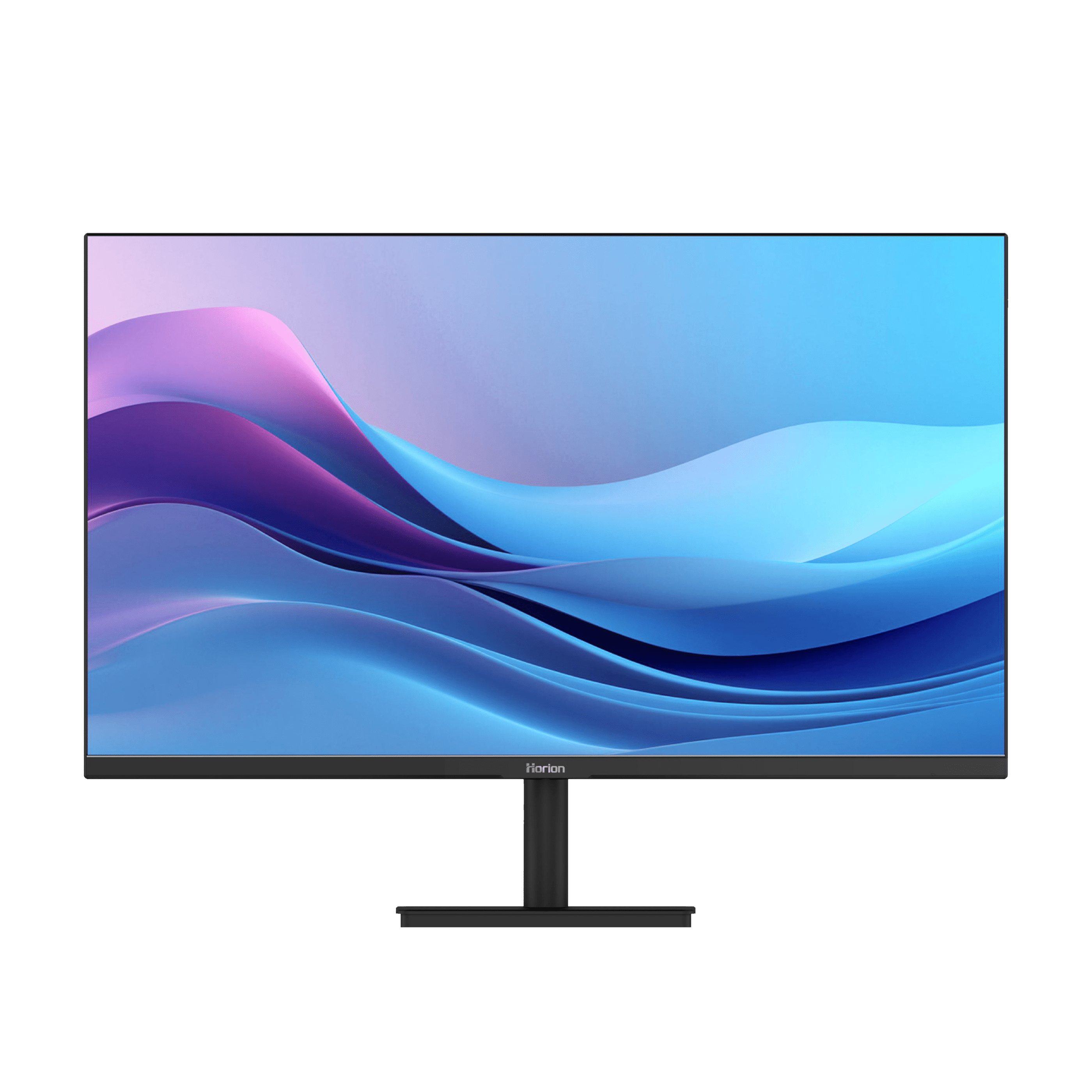
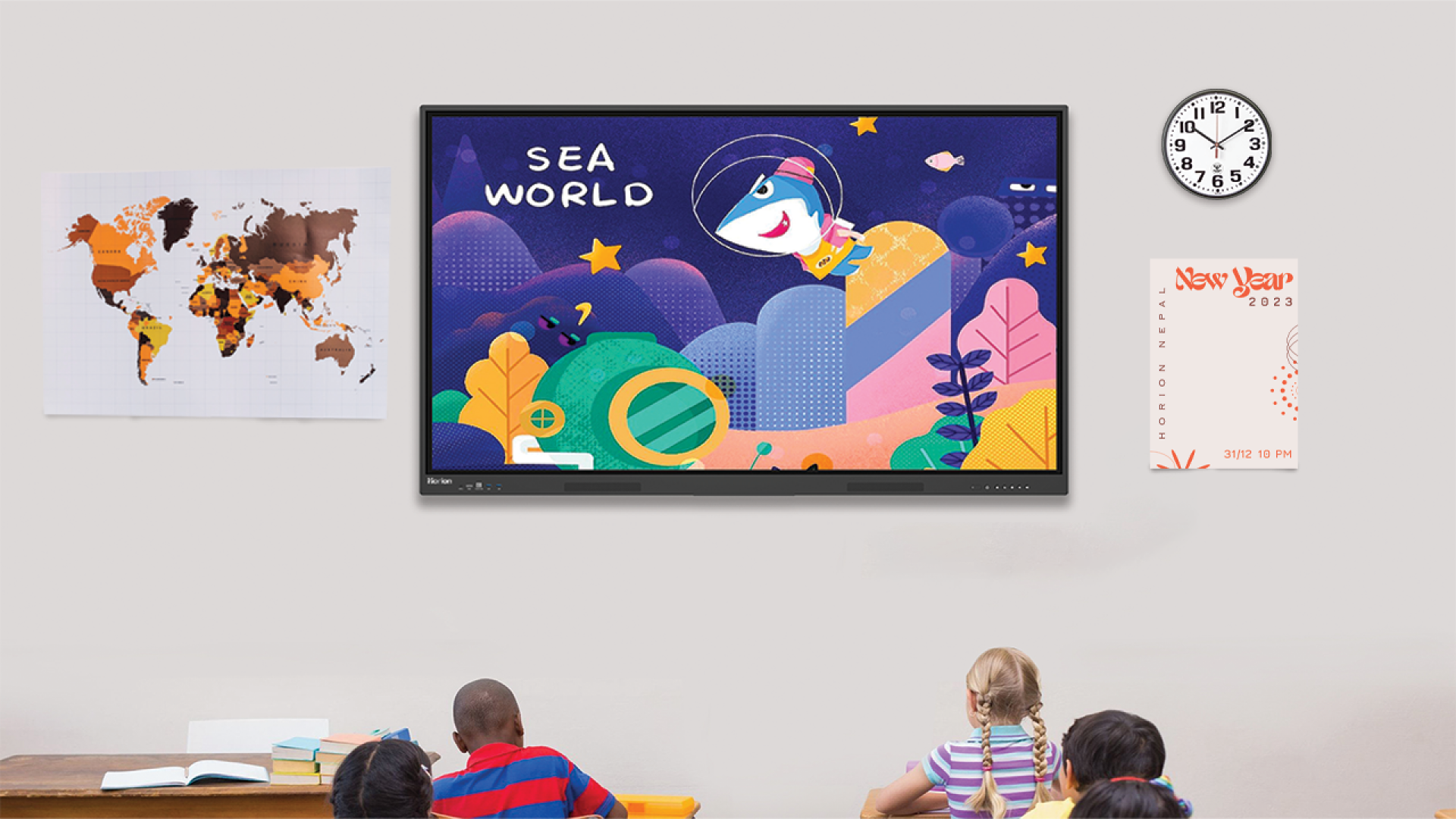
The Horion M6APro V2 stands as the most innovative interactive flat panel available for Nepali schools. Designed specifically for educational environments, this cutting-edge display combines powerful hardware with intuitive software to transform any classroom.
Key Specifications:
- Android 14 Operating System – The latest Android version ensures smooth performance, security updates, and compatibility with thousands of educational applications
- Google EDLA Certified – Official Google certification guarantees access to Google Classroom, Google Meet, YouTube, and the entire Google Workspace ecosystem
- 16GB RAM – Ultra-fast processing handles multiple applications, high-resolution videos, and complex interactive content without lag
- 48MP Camera – Crystal-clear video quality for hybrid learning, student presentations, and parent-teacher meetings
- 4K Ultra HD Display – Stunning visual clarity ensures every student sees content clearly from any seat
Essential Accessories for Complete Classroom Setup
HC-3 Camera System
The HC-3 professional camera elevates video conferencing and hybrid learning capabilities. With advanced auto-tracking and superior image quality, remote students experience classroom participation as if physically present.
HM-3 8-Array Microphone
Clear audio transmission is essential for effective teaching. The HM-3 microphone system captures teacher voices clearly while filtering background noise, ensuring every word reaches students: whether in the room or joining remotely.
These accessories integrate seamlessly with the M6APro V2, creating a comprehensive solution for modern Nepali classrooms.
Step 5: Train Staff and Implement Gradually
Technology investment means nothing without proper teacher training. Even the most advanced interactive display becomes an expensive whiteboard if teachers lack confidence using its features.
Effective training programs should include:
- Basic operation and navigation
- Built-in educational software and tools
- Content creation and lesson planning
- Video conferencing for hybrid classes
- Troubleshooting common issues
- Ongoing support resources
Horion Nepal provides comprehensive training and after-sales support for all installations, ensuring teachers maximize their smart classroom investment.
Implementation should proceed gradually. Start with enthusiastic early-adopter teachers who can demonstrate success and mentor colleagues. As confidence builds across the staff, expand to additional classrooms systematically.

Success Stories: Nepal’s Leading Institutions
The transformation is already happening across Nepal’s most respected educational institutions. Kathmandu University has integrated Horion interactive panels to enhance engineering and science education. Little Angels School uses smart classroom technology to deliver engaging lessons that prepare students for competitive examinations.
St. Xavier’s College and Don Bosco School represent additional success stories: institutions that recognized early the competitive advantage smart classrooms provide. These schools report improved student engagement, better learning outcomes, and increased satisfaction from both teachers and parents.
Their success demonstrates that smart classroom technology works effectively in the Nepali educational context when implemented thoughtfully.
Taking the Next Step
Setting up a smart classroom requires careful planning, appropriate investment, and commitment to ongoing improvement. The five steps outlined above: assessing needs, establishing budget, building infrastructure, selecting technology, and training staff: provide a proven framework for successful implementation.
Nepali schools ready to transform their classrooms can explore solutions tailored specifically for educational institutions. The Horion Education Solution offers comprehensive packages designed for schools at every budget level.
For personalized consultation and live demonstrations, schools can book an appointment with Horion Nepal’s education specialists. The team provides detailed assessments, customized recommendations, and complete support from planning through implementation.
The future of education in Nepal is interactive, engaging, and technology-enhanced. Schools that embrace smart classroom technology and adopt a smart board in Nepal today position themselves as leaders in delivering the quality education Nepali students deserve.